
In short: Piazza Navona is a free public square built over the ancient Stadium of Domitian. Its centrepiece is Gian Lorenzo Bernini’s Fountain of the Four Rivers (1648–1651). The underground stadium is currently closed for restoration (as of 29 October 2026), so check before you go. A Christmas market is planned from 1 December 2026 to 6 January 2027 – check the dates before you go.
Key facts at a glance As of 14 November 2026
- Admission
- Free · open to the public at all times
- Fountain of the Four Rivers
- Bernini, 1648–1651 (unveiled 12 June 1651) · commissioned by Pope Innocent X · Danube, Ganges, Nile and Río de la Plata
- Stadium of Domitian
- Remains beneath the square (entrance at Via di Tor Sanguigna 3) · currently closed for restoration (as of 29 October 2026)
- Christmas market & Befana
- Planned for 1 December 2026 – 6 January 2027 · Befana on the morning of 6 January · check the dates before you go
- Bathing in the fountains
- Prohibited · fines from €450
- Getting there
- No metro station · about 10 minutes’ walk from the Pantheon
- UNESCO
- Part of the World Heritage Site “Historic Centre of Rome”, criterion (i)
Tours & tickets around Piazza Navona
The square itself is free. If you want the background, a guided walk linking Piazza Navona with the Pantheon and the Trevi Fountain is well worth it. We are not recommending stadium tickets for now, as long as its status remains unclear.
Turismo Roma – Stadium of Domitian (status)UNESCO – Historic Centre of Rome
Concerts at this venue

Fri 17:30
Open Air Opera Concert: Best Arias and Love Duets
Palazzo Pamphilj (Piazza Navona)
Hear famous arias from Puccini's Tosca as well as selected arias by Verdi, Rossini and Bellini in the historical setting of the Palazzo Pamphili …
Booked via Classictic

Fri 17:30
Open Air Opera Concert: Best Arias and Love Duets with Dinner
Palazzo Pamphilj (Piazza Navona)
Hear famous arias from Puccini's Tosca as well as selected arias by Verdi, Rossini and Bellini in the historical Palazzo Pamphili on Piazza Navona …
Booked via Classictic
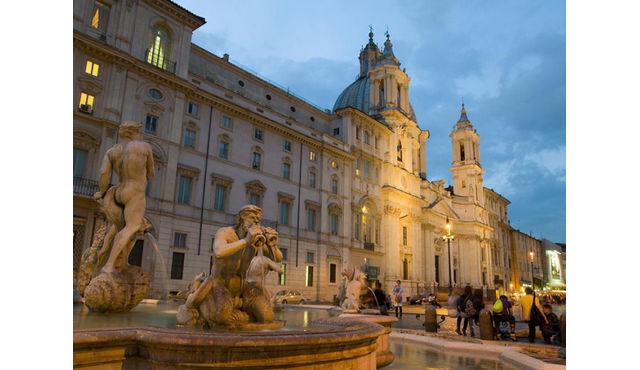
Fri 17:45
Great Symphonies at Piazza Navona
Sant’Agnese in Agone
In this highly-anticipated concert, hear the mellifluous sounds of chamber music by Mozart and Beethoven at Rome's treasured and world-renowned Sant’Agnese in Agone.
Booked via Classictic
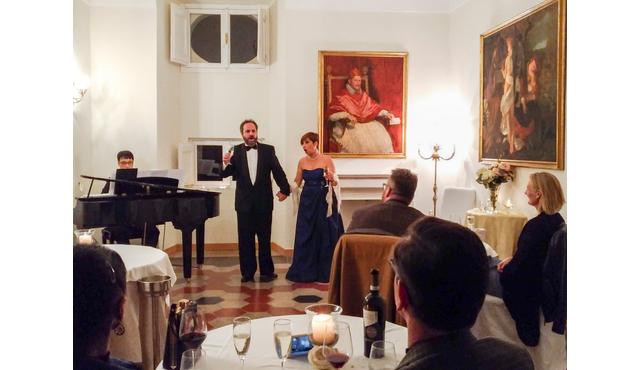
Fri 19:30
Opera Dinner: Dining During an Opera Interlude
Palazzo Pamphilj (Piazza Navona)
With a program featuring the great Tosca, Rigoletto, La Bohème, Pagliacci, La Bohème, La Sonnambula and La Traviata by Verdi, Puccini, Bellini and Leoncavallo, …
Booked via Classictic
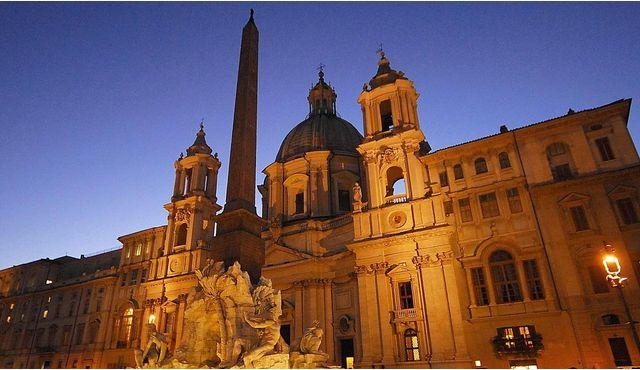
Sat 17:00
Viva Vivaldi: The Four Seasons in Piazza Navona
Sant’Agnese in Agone
Experience Vivaldi's masterpiece in an arrangement for piano quintet in Rome.
Booked via Classictic
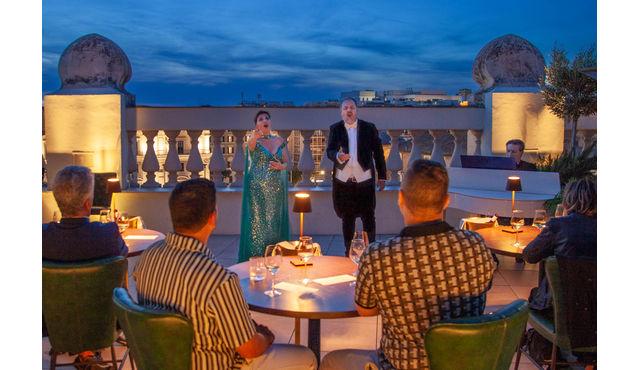
Sun 17:30
Open Air Opera & Aperitif at Terrazza Borromini
Palazzo Pamphilj (Piazza Navona)
Hear the famous arias from Puccini's Tosca as well as selected arias by Verdi, Rossini, and Bellini in the historical setting of the Palazzo …
Booked via Classictic
No dates for this selection. Reset a filter.
Dates come directly from our ticket partners Classictic and Music-Opera and are updated every night. Prices and availability are shown by the partner, where you book with instant e-mail confirmation. If you book through these links we earn a small commission at no extra cost to you. Showing the next 6 of 192 dates.
Is Piazza Navona worth visiting?
Piazza Navona costs nothing and is one of the finest Baroque squares in Rome. Allow 30–45 minutes.
Yes, if…
- you love Bernini and the Baroque: the Fountain of the Four Rivers is one of his masterpieces.
- you are looking for a stroll between the Pantheon and Campo de’ Fiori.
- you are visiting in December: the Christmas market is planned from 1 December.
Perhaps not, if…
- you want peace and quiet: the square is crowded with street performers and tourists from morning until late evening.
- you want to eat cheaply: café and restaurant prices on the square are high.
- you mainly want to see the Stadium of Domitian: it is currently listed as closed for restoration.
Our tip: Come early in the morning or late in the evening, when the square is almost empty, and combine your visit with the Pantheon (about 10 minutes’ walk).
Editorial assessment by Treffpunkt Rom based on the facts above – not a substitute for checking the official information.
What you will see on Piazza Navona
- Fountain of the Four Rivers in the centre: Bernini’s fountain with the river gods of the Danube, Ganges, Nile and Río de la Plata, crowned by an obelisk.
- Fountain of Neptune (basin 1574 by Giacomo della Porta, statue 1878) and Fontana del Moro (basin 1575, Moor figure by Bernini 1673) at either end of the square.
- Sant’Agnese in Agone – Baroque church; construction began in 1652, with Borromini in charge from 1653.
- Palazzo Pamphilj – today the Brazilian Embassy.
The oval shape of the square follows the outline of the ancient stadium, and the surrounding houses stand on its former seating tiers. The name Navona derives from “in agone” (“at the games”).
The Stadium of Domitian beneath the square
Beneath the piazza lie the remains of Emperor Domitian’s stadium: built around AD 85/86 (or 80), it measured roughly 265–275 × 106 m and held about 30,000 spectators. The entrance at Via di Tor Sanguigna 3 is currently closed for restoration (as of 29 October 2026), although some resellers advertise daily opening. Check the status before your visit.
Christmas market & Befana
The market is planned from 1 December 2026 to 6 January 2027; the Befana arrives on the morning of 6 January, accompanied by the fire brigade band. Please check the dates before you travel. The market has a long tradition: in 1477 Pope Sixtus IV moved the weekly market here, and in 1869 it moved on to Campo de’ Fiori.
Practical tips & rules
- Bathing in historic fountains costs €450 per offence; the Fountain of the Four Rivers is explicitly named among the fountains concerned (as of August 2025).
- The fountain water is not drinking water; there are public drinking fountains (“nasoni”) nearby.
- Café prices on the square are high, and pickpockets are a known risk in the crowds.
History: from stadium to Baroque square
Where cafés and street artists are found today, athletes competed in antiquity. The square as we know it is a High Baroque creation under Pope Innocent X of the Pamphilj family.
- 85/86 Stadium of Domitian built for the Capitoline Games.
- 1477 Sixtus IV moves the market here from the Capitoline Hill.
- 1574/75 Fountain of Neptune and Fontana del Moro by Giacomo della Porta.
- 1648–1651 Bernini’s Fountain of the Four Rivers; unveiled on 12 June 1651.
- 1652/53–1866 The square is flooded in summer until Pius IX abolishes the custom.
- 1673 Bernini adds the Moor with the dolphin.
- 1869 The market moves to Campo de’ Fiori.
- 1878 Statue of Neptune added.
- 2011 The Fontana del Moro is damaged by vandals.
Curiosities & surprises
- Bernini vs Borromini?Legend / disputedThe story that the Nile covers his face so as not to see Borromini’s church façade is a legend: the fountain was finished in 1651, while the façade was only built in 1653–57.
- The silver modelLegend / disputedAccording to tradition (Baldinucci, 1682), Bernini won the commission after the Pope saw his model; a “silver model” is not historically attested.
- Protests against the fountainDuring the famine of 1646–48, satirical pasquinades protested against “obelisks and fountains”.
- A flooded squareFrom 1652/53 to 1866 the square was flooded on summer weekends in August – a Pamphilj festivity. There is no evidence of staged “naval battles”.
- The martyrdom of St AgnesLegend / disputedAccording to legend, Sant’Agnese in Agone stands on the spot where St Agnes was martyred.
- Palazzo PamphiljThe palace now houses the Brazilian Embassy.
Getting there & location
There is no metro station at Piazza Navona. Bus routes 46, 62 and 64 stop nearby – please check with ATAC. The Pantheon is about 10 minutes away on foot. Coordinates: approx. 41.8987° N, 12.4731° E.
Nearby
Frequently asked questions
Is there an admission charge for Piazza Navona?
No, the square is public and freely accessible. Only the underground stadium requires a ticket.
What lies beneath Piazza Navona?
The remains of the Stadium of Domitian (roughly 265–275 × 106 m, about 30,000 seats), entrance at Via di Tor Sanguigna 3. It is closed for restoration (as of 29 October 2026).
Who built the Fountain of the Four Rivers?
Gian Lorenzo Bernini, 1648–1651, commissioned by Pope Innocent X.
Is the story about Bernini and Borromini at the fountain true?
No, it is a legend: the fountain was finished in 1651, whereas the façade of Sant’Agnese was only built from 1652/53 onwards.
Is there a Christmas market in 2026?
One is planned from 1 December 2026 to 6 January 2027; check the dates before you go.
When does the Befana come to Piazza Navona?
On the morning of 6 January, accompanied by the fire brigade band.
Can you bathe in the fountains?
No – it is prohibited and fines start at €450.
How do I get to Piazza Navona?
There is no metro station; take a bus such as the 46, 62 or 64 or walk from the Pantheon in about 10 minutes.
Sources & last checked
All time-sensitive information (opening times, prices, rules) was checked on 14 November 2026. The official websites always take precedence – subject to change.