
In short: The most impressive ancient baths in Rome are the Baths of Caracalla with their huge brick ruins. The Baths of Diocletian, once the largest in the city, are visited as part of the Museo Nazionale Romano opposite Termini. In Ostia Antica, the Baths of Neptune show floor mosaics of the sea god. The Terme Taurine near Civitavecchia are closed until further notice and open only on individual Sundays. You cannot bathe in any of them.
Ancient baths at a glance Updated 21 November 2026
- Baths of Caracalla
- Tue–Sun, in winter 9 am–4:30 pm (last entry 3:30 pm), closed on Mondays
- Baths of Diocletian
- Tue–Sun 9 am–7 pm (last entry 6 pm), Museo Nazionale Romano combined ticket €15
- Baths of Neptune
- In the Ostia Antica Archaeological Park, Tue–Sun, closed on Mondays
- Terme Taurine
- Closed until further notice, special openings on individual Sundays
- Free
- State-run sites on the first Sunday of the month
Ancient baths compared
| Site | What you see | Time needed |
|---|---|---|
| Baths of Caracalla Rome, Aventine/Celian | Huge ruins of the imperial baths, remains of mosaics, Domus di Vigna Guidi | 1.5–2 hrs |
| Baths of Diocletian Rome, Termini | Museum areas, cloister, church of Santa Maria degli Angeli | 1.5–2 hrs |
| Baths of Neptune Ostia Antica | Black-and-white floor mosaics with Neptune and Amphitrite | Part of a half day in Ostia |
| Terme Taurine Civitavecchia | Roman bath complex from the time of Trajan | approx. 1 hr |
Baths of Caracalla
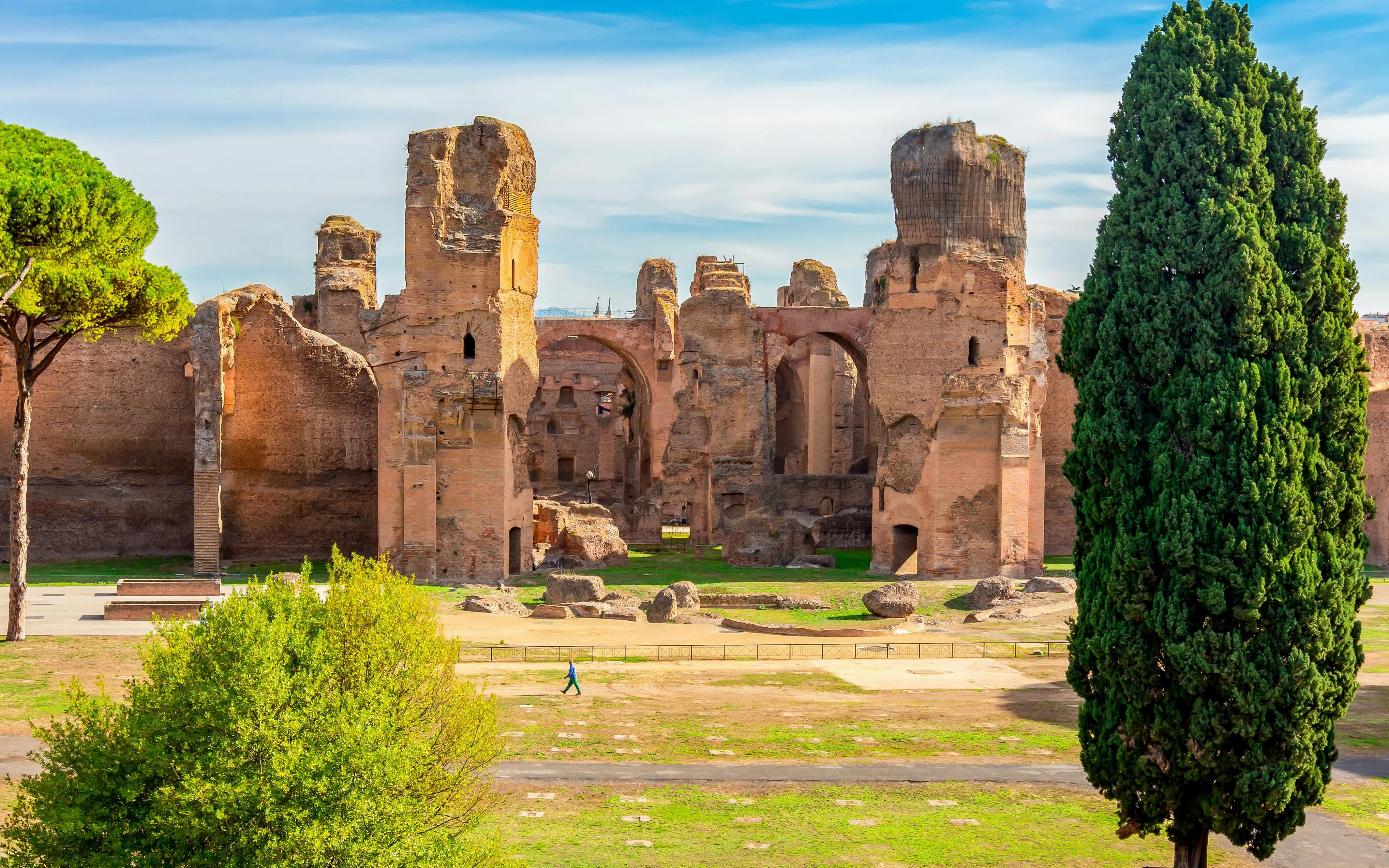
The Baths of Caracalla opened at the beginning of the 3rd century and could hold more than a thousand bathers at a time: cold bath, warm bath, hot bath, swimming pool, sports grounds and libraries. Today you walk between massive brick walls and see remains of the floor mosaics and the underground passages where slaves stoked the furnaces. Traditionally the Teatro dell’Opera performs here in the open air in summer; in 2026 the festival moved to the Circo Massimo because of restoration work.
From late October to late February the baths are open Tuesday to Sunday from 9 am to 4:30 pm, last entry 3:30 pm; closed on Mondays. Tickets are personalised and available on the official Musei Italiani platform, in the app or on site. The Domus di Vigna Guidi is included in the ticket, but closed on very busy days such as free Sundays. Find out more on our Baths of Caracalla page.
Baths of Caracalla: tickets and tours
Don’t fancy queuing at the ticket office? With a pre-booked priority-entrance ticket you walk past the ticket queue and spend the time in the ruins instead – especially at weekends, on public holidays and in winter, when the ticket office closes as early as 3:30 pm. Your ticket is safely on your phone, and you can plan the day around your visit.
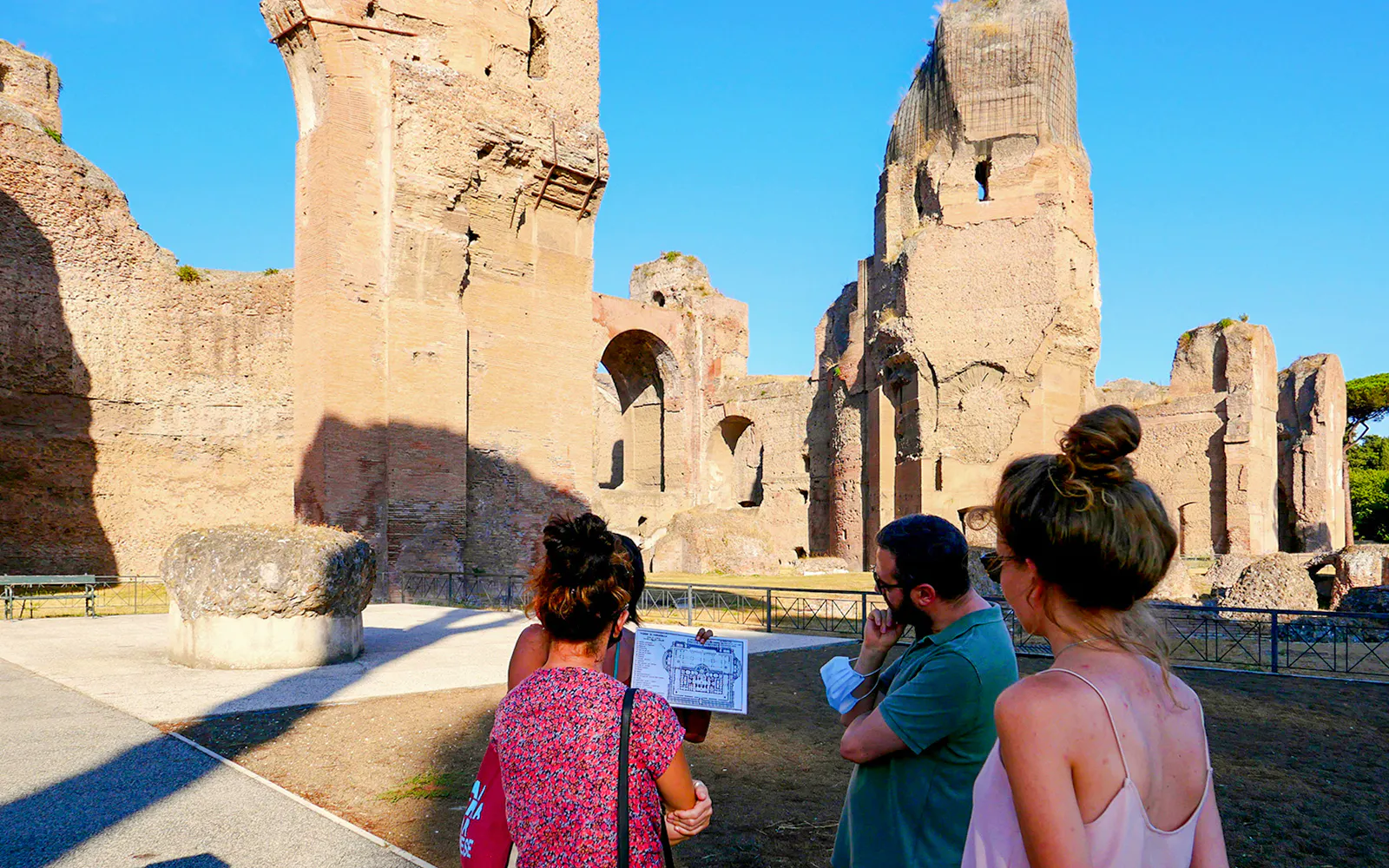
The Baths of Caracalla are vast, and without an explanation many walls stay silent. With an audio guide or a guide you can tell where the cold, warm and hot baths were and how thousands of Romans bathed here every day.
No queuing, at your own pace: ticket with priority entrance – past the queue and round the site on your own.

Our tip for most visitors: fast-track entry plus audio guide – no queuing, and you understand what you see while deciding for yourself how long you stay.
With a guide and the Circus Maximus: small group, questions welcome at any time – and the emperors’ racetrack right next door is included.
Antiquity plus wellness: first the imperial baths, then into warm water yourself at the QC Terme Roma spa near Fiumicino.

Combo: QC Terme Roma + Baths of Caracalla Priority Entrance Tickets
Live prices from Headout, updated hourly.
Pick your date in the calendar – you will see the price and availability straight away.
Baths of Diocletian
The Baths of Diocletian near Termini station were the largest baths in ancient Rome. Michelangelo converted part of them into the church of Santa Maria degli Angeli, which is free to enter. The museum section belongs to the Museo Nazionale Romano and is open Tuesday to Sunday from 9 am to 7 pm, last entry 6 pm. The combined ticket for all sites costs €15 and is valid for one week from the first visit.
Currently closed (21 November 2026): The Aula Ottagona has been temporarily closed since 16 November while an exhibition is dismantled. The Natatio, Aula VIII and the Museum of Protohistory are inaccessible until further notice. Check before your visit which areas are open.
Baths of Neptune in Ostia Antica
Several baths survive in ancient Rome’s port city. The best known are the Baths of Neptune on the Decumanus: from a first-floor terrace you look down on large black-and-white mosaics – Neptune drives a team of four sea horses, next to him his wife Amphitrite with tritons. In winter, delicate mosaics in the park are protected with covers and uncovered again in spring. Allow at least half a day for Ostia; everything about getting there and the walking route is on our Ostia Antica page.
Terme Taurine near Civitavecchia
The Terme Taurine, also called the Baths of Trajan, lie about 4 km north of Civitavecchia on the road towards Tolfa, not far from the Bagni della Ficoncella. The site is normally closed until further notice. The Ministry of Culture publishes individual special openings; the next one is on Sunday 22 November 2026, from 11:30 am to 3:30 pm (last entry 3 pm). Admission costs €5, with a guided tour €8, under-18s go free. Booking is possible but not compulsory. Check further dates on the Ministry’s website.
How did a Roman bath work?
A visit to the baths followed a fixed order: after changing in the apodyterium, bathers went into the lukewarm tepidarium, then the hot caldarium and finally the cold frigidarium. The rooms were heated by underfloor heating, the hypocaustum. You can still find the same warm-to-cold principle today in the natural pools near Viterbo. If you would like to bathe yourself, our overview Hot springs near Rome shows the options.
More pages
- Hot springs near RomeWhere you can bathe in thermal water today
- Baths of CaracallaTickets, history and tips
- Museo Nazionale RomanoPalazzo Massimo and Baths of Diocletian
- Ostia AnticaGetting there and walking route from Rome
- Free Sundays in RomeWhich sites are free
Frequently asked questions
Which ancient baths can you visit in Rome?
The Baths of Caracalla as an archaeological park and the Baths of Diocletian as part of the Museo Nazionale Romano. There are also the Baths of Neptune in the Ostia Antica Archaeological Park and, on special opening days, the Terme Taurine near Civitavecchia.
How long do you need for the Baths of Caracalla?
One and a half to two hours is enough for a relaxed visit. In winter the site closes as early as 4:30 pm, with last entry at 3:30 pm.
Can you bathe in the ancient baths?
No, they are all excavations or museums. To bathe in thermal water, go to Tivoli or Viterbo.
Are the Terme Taurine open?
Not normally; they are closed until further notice. The Ministry of Culture announces individual special openings, for example on 22 November 2026 from 11:30 am to 3:30 pm.
Which were the largest baths in ancient Rome?
The Baths of Diocletian, opened at the beginning of the 4th century. Part of their main hall is now the church of Santa Maria degli Angeli.
Updated 21 November 2026. Times and closed areas may change – check the official website before your visit.